
From Street Photography to Self-Publishing: My Far East Darkroom Interview
Becoming a photographer was hardly ever my original intention.
When I first came to Japan in 2015, I bought my first proper camera simply because I wanted to take better photographs while travelling. I had no plans to become a photographer, and strangely enough, not too much interest in photographing the iconic places most visitors immediately associate with Japan.
Instead, I found myself most interested in the people.
Everyday moments, streets, gestures and scenes from a place, far from home and which captivated my imagination from a young age, are what interested me much more than landmarks. That curiosity eventually became an obsession with street photography and, over the following years, one of the main reasons I kept returning to Japan before eventually making Tokyo my home.
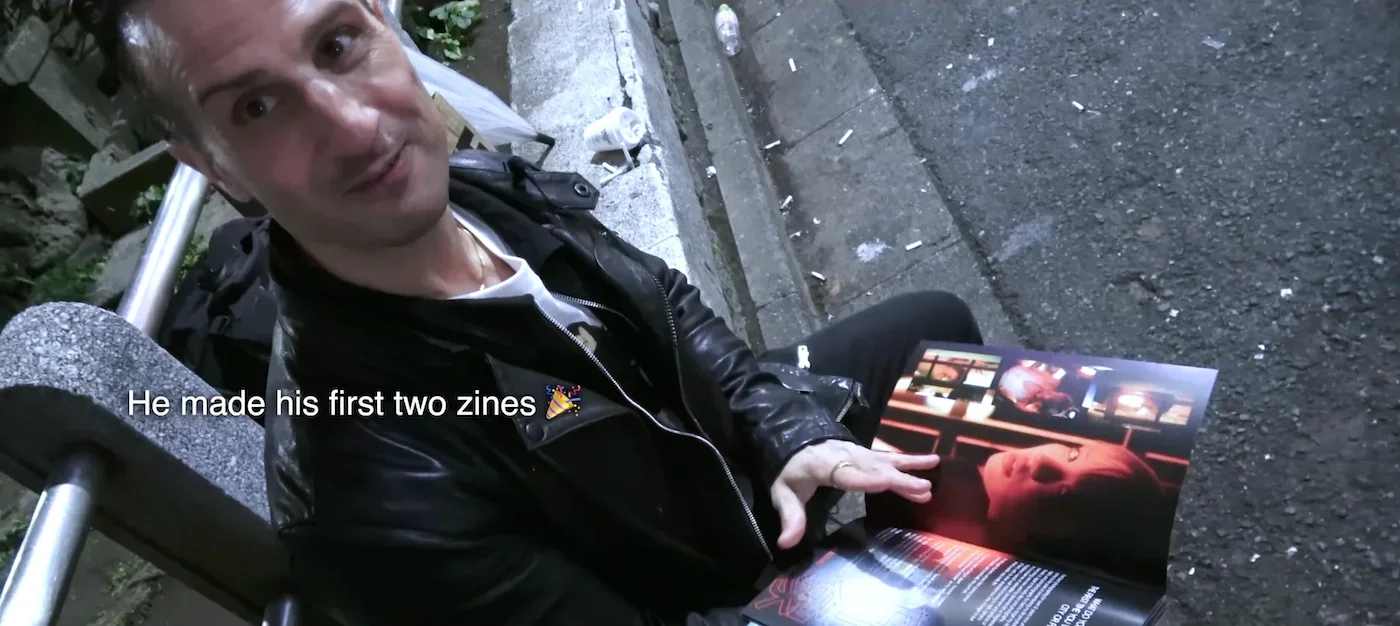
Recently, I had the chance to go on a night walk and talk with Far East Darkroom to chat about that journey, my photography and the process behind my independently published photo zines.
From the Street to Portrait Photography
For roughly the first five years I photographed almost exclusively on the street. I had never really considered myself a portrait photographer as I had not taken a real portrait of someone until about early 2021.
When I eventually began working with people more intentionally, I realised that my approach hadn't changed as much as I expected.
Rather than starting with the person, I would often imagine the street photograph first — the light, environment, composition and atmosphere — and then place someone into that scene.
That street photography background still influences much of my portrait work today.
It also became an important part of how I approached my first self-published photography projects.
First Impressions: Taiwan and Hong Kong
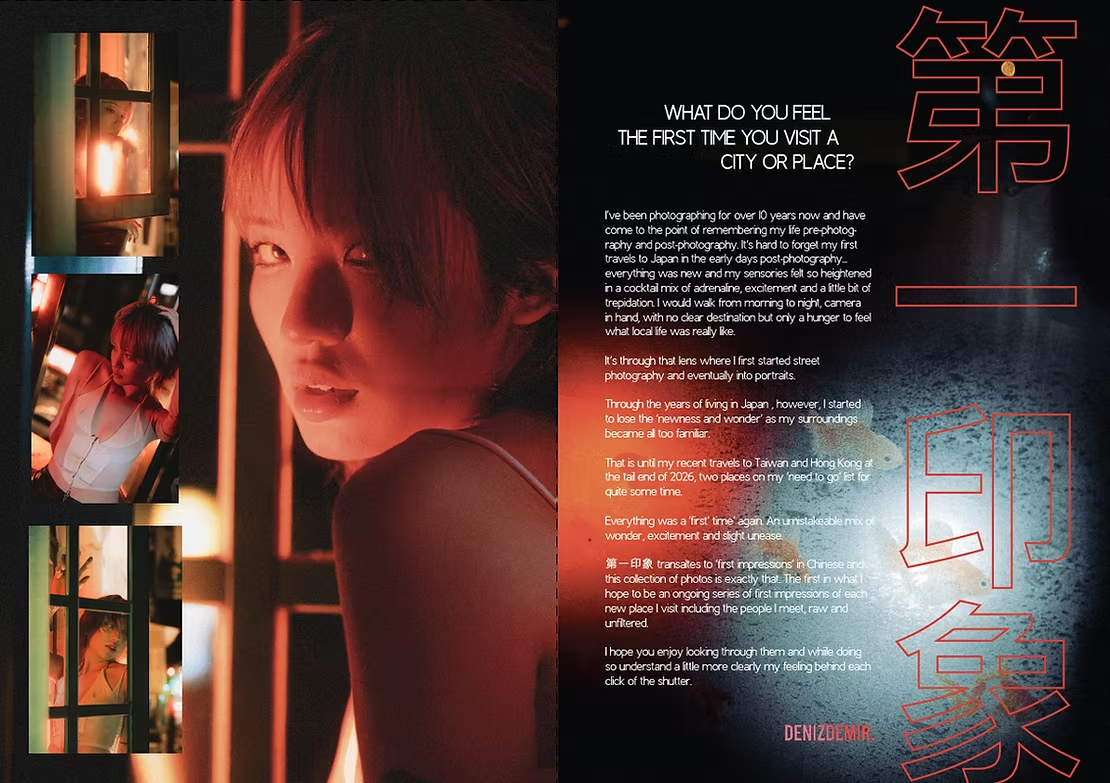
My First Impressions series began as a way of documenting cities or places I went to as a photographer for the first time through a combination of street photography and portraits.
The earliest version of the book separated the two completely: one section for street photographs and another for portraits.
After showing the first draft to Yusuke aka Nuts Tokyo, I was encouraged to try mixing everything together instead.
That suggestion completely changed the books.
The street photographs and portraits began to interact with each other, sometimes to the point where the distinction between them became almost irrelevant. A portrait could feel like a street photograph, while an ordinary street scene could become part of a larger constructed narrative.
Colour, movement and visual relationships between photographs became just as important as the individual images themselves.
This became especially important while creating the Hong Kong edition.
Hong Kong felt chaotic, layered and visually overwhelming — neon, reflections, people, signage, traffic and small moments happening everywhere at once. Rather than presenting each photograph individually like something hanging on a gallery wall, I wanted the pages themselves to carry some of that energy.
Some spreads contain several photographs bleeding into one another almost like a collage.
The goal was never to create a collection of isolated “hero images.” It was to create an experience.
Thinking Beyond the Single Photograph
That way of thinking has also influenced how I share photography online.
When I create an Instagram carousel, I rarely think of it as ten separate images. I design it more like one long magazine spread that happens to be divided into ten frames.
Sometimes an image continues across two slides. Sometimes one photograph occupies most of the space while another appears much smaller.
That doesn't necessarily make one photograph more important than another.
What matters to me is how the photographs work together.
I've never been particularly interested in chasing the one famous photograph of a location that has already been made thousands of times. I'm much more interested in building collections of images that create an atmosphere and communicate how a place actually felt to me.
Where the Books Are Going Next
Self-publishing has gradually become another part of my photographic practice.
What began with smaller projects such as First Impressions: Taiwan and First Impressions: Hong Kong has now developed into larger publications exploring more of the work I create.
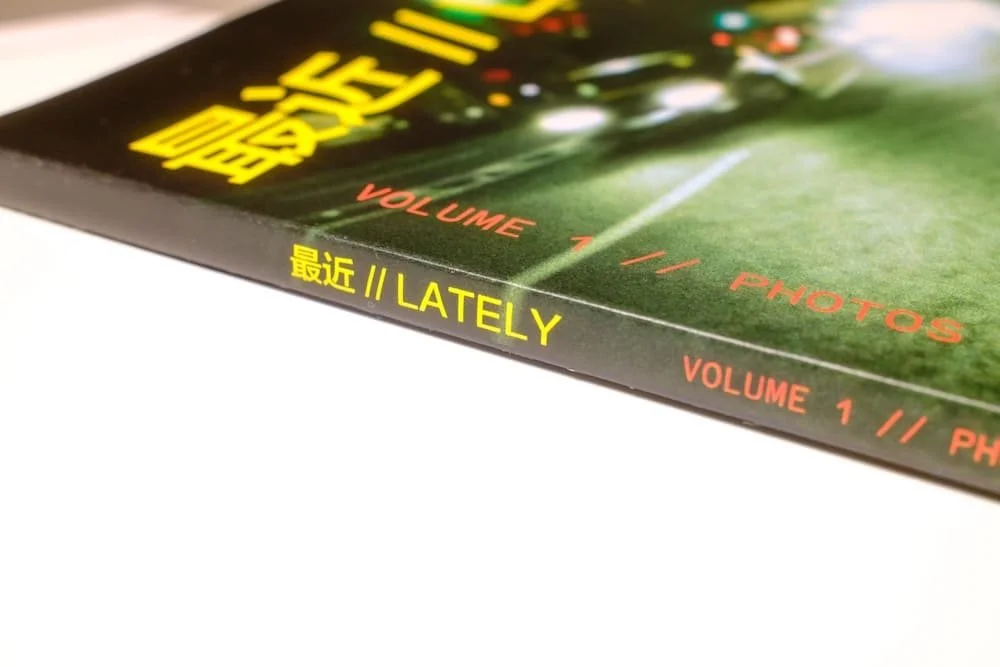
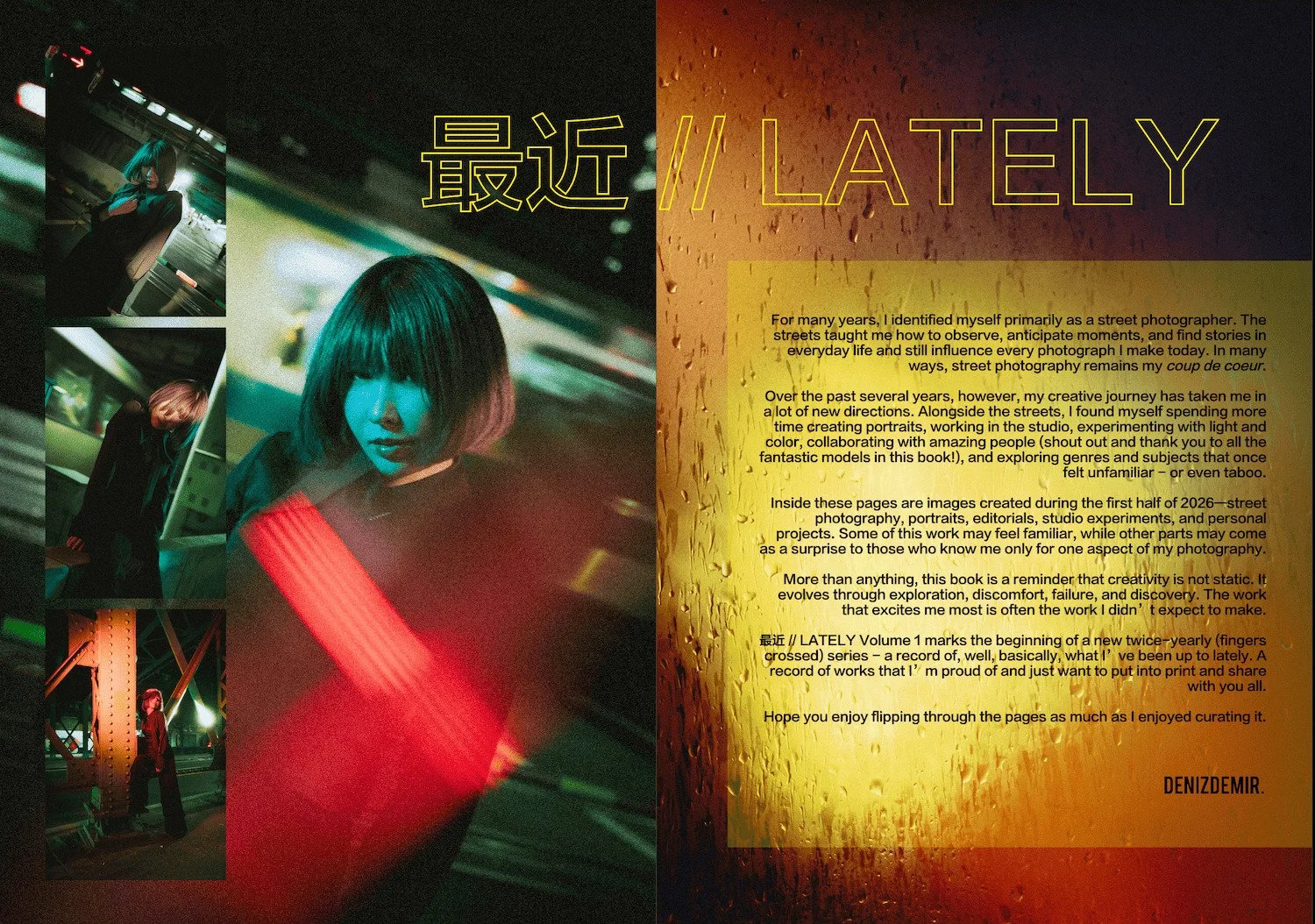
My newest book, 最近 // LATELY Vol. 1, brings together six months of photography across street work, portraits, studio photography, more intimate personal work and experimental projects.
Rather than separating those different sides of my photography, LATELY is about allowing them to coexist.
It is also the beginning of a new twice-yearly series — a physical record of where my photography is at a particular moment, how it is changing, and where it might go next.
Watch the full Far East Darkroom interview above, or explore my current and previous photography publications through my shop.
Thanks for reading as always!
.d